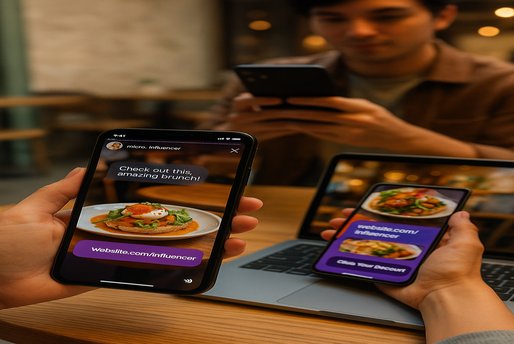
In the world of restaurant marketing strategy 2025, authenticity reigns supreme. While celebrity endorsements are expensive and broad, a more targeted, credible, and cost-effective approach is taking over: micro-influencer partnerships. For restaurant owners, cafe managers, and food truck operators, combining the power of local micro-influencers with a strategic mini website for cafes creates a potent formula to drive traffic, build trust, and boost sales. This is a crucial digital solution for food business growth.
Why Micro-Influencers are a Perfect Fit for Food Brands
Micro-influencers (typically 1,000 to 50,000 followers) boast highly engaged, niche audiences who trust their recommendations implicitly. For a local restaurant, a recommendation from a trusted local foodie holds more weight than a generic ad. This hyper-local relevance is gold for local SEO for restaurants and community building. They offer higher engagement rates, more authentic content, and are far more affordable than macro-influencers, providing a better return on investment and a lower Customer Acquisition Cost (CPA).
The Strategic Hub: Your Mini Website Link
Every influencer campaign needs a destination, and a generic Instagram profile isn't enough. Your restaurant website in India, or specifically your mini website, is the perfect landing pad. Unlike a social media bio limited to one link, your mini web link can host everything: a dedicated landing page for the influencer's followers, a special offer, your full digital menu, and direct links to your online ordering for restaurants system and WhatsApp ordering system. It converts casual interest into measurable action.
Crafting the Influencer Landing Page
Create a unique page on your mini website (e.g., yourminiweb.com/[influencername]). This page should welcome the influencer's audience directly, feature the content they created, and offer an exclusive, trackable promo code or offer like "10% OFF your first order with code [NAME]10". This not only makes followers feel special but also allows you to directly attribute sales and measure the campaign's success through your POS software for restaurants.
Executing a Successful Micro-Influencer Campaign
A structured approach ensures maximum impact and ROI.
1. Finding the Right Partners
Don't just look at follower count. Use Instagram and Facebook search to find local foodies whose content style and audience demographics align with your brand. Look for high engagement rates (comments, shares) on their posts. Tools like native Instagram insights or third-party platforms can help identify authentic influencers who are genuinely passionate about food.
2. Structuring the Collaboration
Reach out with a personalized offer. Compensation can be a free meal, a flat fee, or a commission-based structure on sales generated through their unique code. Clearly outline expectations: number of posts, stories, required hashtags, tags, and most importantly, the mandatory inclusion of your mini web link in their bio and story swipe-ups. The goal is to drive traffic to your food ordering system.
3. Amplifying the Content
Don't let the influencer's content disappear after 24 hours. Repurpose their high-quality photos and videos on your own social media for restaurants, website, and even digital menus. This provides social proof and extends the value of the partnership. User-generated content is incredibly effective for festival marketing for food brands campaigns.
Case Study: The Local Foodie Collaboration
A new cloud kitchen specializing in gourmet wraps partnered with three local micro-influencers (each with ~15k followers) for their launch week. Each influencer received a free meal box and created Instagram Reels showcasing the food. They all used the same unique promo code and linked to a dedicated page on the cloud kitchen's mini website in their bios. The result? The campaign generated over 300 uses of the code within two weeks, with a Average Ticket Value (ATV) 20% higher than standard orders. The kitchen tracked it all through their restaurant billing software, confirming a 5x return on investment from the campaign's cost.
Measuring Campaign Success: Key KPIs
To evaluate your influencer partnerships, track these metrics:
- Trackable Promo Code Redemptions: The direct measure of sales generated.
- Website Traffic Source: Use analytics to see traffic spikes from social media referrals.
- New Customer Acquisition: Compare the number of first-time orders during the campaign period.
- Social Engagement: Monitor likes, comments, and shares on the influencer's posts.
- Cost Per Acquisition (CPA): Calculate total campaign cost divided by number of new customers acquired.
Micro-Influencer Campaign Checklist
- Identify 5-10 relevant local micro-influencers in your niche.
- Create a dedicated landing page on your mini website for the campaign.
- Generate a unique, trackable promo code for each influencer.
- Outline clear deliverables: posts, stories, tags, and link in bio.
- Track code redemptions in your POS software to measure sales impact.
- Repurpose the influencer content on your own social media channels.
- Analyze the CPA and Repeat Purchase Rate of acquired customers.
Integrating with Your Digital Ecosystem
This strategy doesn't exist in a vacuum. The influencer's link should lead to a page that seamlessly integrates with your entire digital solutions for food business stack. The page must have a clear call-to-action that links directly to your QR code food menu, your online ordering platform, or a pre-populated message for your WhatsApp ordering system. This creates a frictionless path from discovery to purchase, which is essential to grow restaurant business online.
Leveraging micro-influencers and directing their audience to a targeted mini web page is a powerful, measurable, and authentic marketing strategy. It builds local buzz, drives direct sales, and provides a treasure trove of authentic marketing content, all while offering a clear return on investment that broad-scale advertising often lacks.
Ready to build authentic local buzz? Start partnering with influencers today.